



Sentence completion and short answers: pocket parks
You can find the words a gap needs, copy them exactly, and stay inside the word limit.
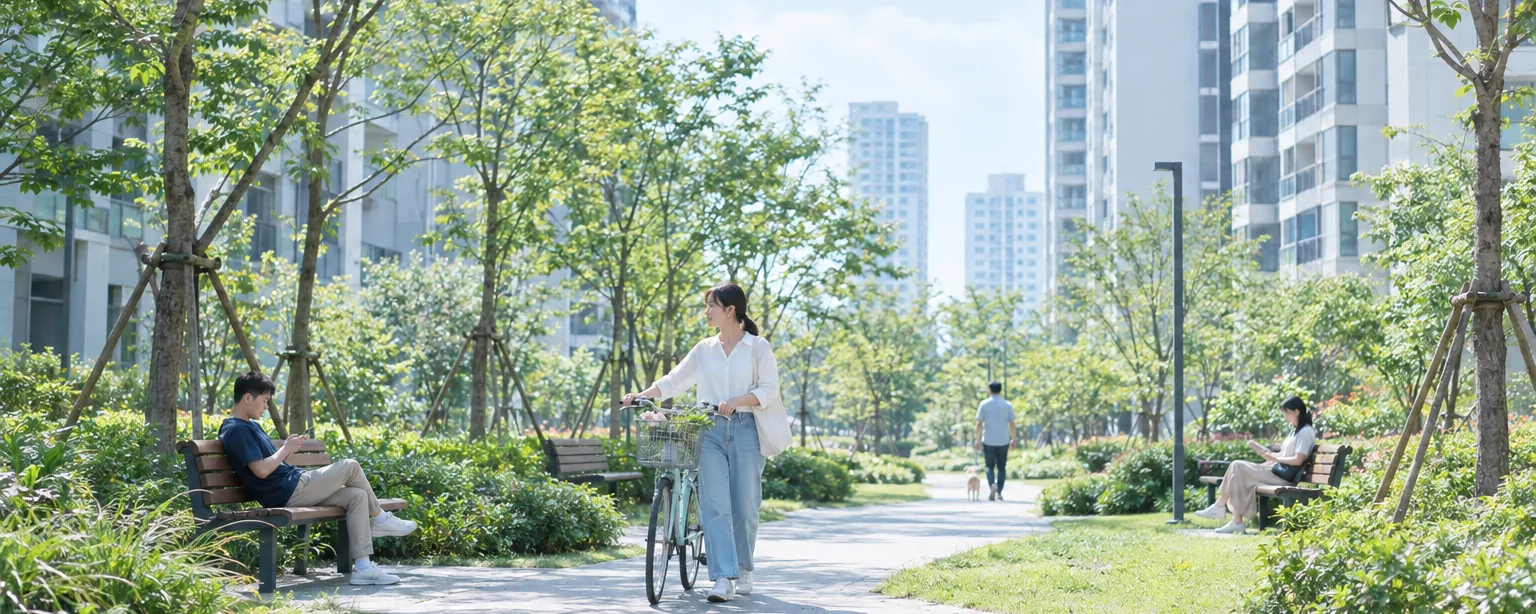
Our passage is about pocket parks: public gardens no bigger than a building plot, squeezed in between flats and shops.
You answer two kinds of question on it. In sentence completion you fill a gap in a sentence, and in short answers you answer a question. Both take their words from the passage, and both have a word limit. Go over the limit and the answer is marked wrong.
Warm-up
What does the gap need?
Before you look for an answer, look at the words on both sides of the gap.
In summer, the trees in a small park give ______ to people on the benches.
How it works
Complete the sentences below. Choose NO MORE THAN TWO WORDS from the passage for each answer.
- 1A pocket park can be as small as one 1.
- 2Pocket parks can be built quickly, partly because the land they use is often 2.
- 3Some families live in flats with no garden or 3.
- 4Leaves help to cool the air by giving off 4.
- 5Designers add falling water to cover the sound of 5.
- 6To reassure neighbours, many pocket parks are 6 after dark.
Answer the questions below. Choose NO MORE THAN THREE WORDS AND/OR A NUMBER from the passage for each answer.
- 7How long had the plot on Kestrel Road been empty?7
- 8Apart from paving, what did the council pay for?8
- 9When do the volunteers look after the raised beds?9
Each question set has its own word limit, so read the instruction line before every set.
How to answer
- 1Predict the kind of word
Look at the words just before and after the gap. After one, you need a singular noun. After are, perhaps an adjective or a past participle. Decide whether a number could fit.
- 2Find the right part of the passage
The questions are in the same order as the information in the passage. Pick an easy word to scan for in each question, such as a name, a number or an unusual word.
- 3Match the meaning
The question says the same thing as the passage in different words. This is called paraphrase. Find the sentence in the passage that means what the question means.
- 4Copy the words exactly
Take the answer from the passage as it is written. Keep its spelling, and keep it singular or plural, as the passage has it.
- 5Check the limit and the grammar
Read the whole sentence with your answer in it. It must be grammatical and stay inside the word limit. A hyphenated word counts as one word, and numbers can be written as figures or as words.
Two question types, one skill
A sentence with a gap. Your answer must fit its grammar. The market is held every ______. Passage: a market is held every Thursday morning. Answer: Thursday morning.
A question. Answer it with words from the passage and nothing more. What time does the market close? Passage: it closes at 2 pm. Answer: 2 pm.
The passage
Small parks for crowded streets
A In the centre of most large cities, open space is scarce and land is expensive. A new park the size of a football pitch is out of reach for most local councils, however much residents want one. Many planners have therefore started to think small. A pocket park is a public green space that may be no bigger than a single building plot. It might sit between two blocks of flats, behind a row of shops, or on a corner that nobody else wanted.
B Most pocket parks are made from land that had no use. A plot may have stood empty since a building was demolished, or it may be a strip beside a railway line, or part of a wide street where cars once parked. Because this kind of land is often cheap, or already belongs to the council, a pocket park can be built in months. A large park, by comparison, can take years to plan and pay for.
C The small size of these parks shapes the way people use them. A large park draws visitors from across the city, but a pocket park mainly serves people who live or work within a few minutes' walk. Office workers eat their lunch there, parents stop with young children on the way home from school, and older residents use the benches to rest and meet their neighbours. For families in flats without a garden or a balcony, it may be the nearest green space they have.
D Even a small area of trees and planting can change the street around it. Trees give shade, and their leaves give off water vapour, which cools the air on hot days. Soil and plants also soak up rain that would otherwise run off roofs and roads into the drains, which helps during heavy storms. Many designers include a small fountain or a wall of falling water, because the sound helps to cover the noise of traffic.
E Pocket parks also bring problems. Someone has to water the plants, sweep the paths and mend broken benches, and a council that builds twenty small parks has twenty small sites to look after. Some neighbours worry that a small, enclosed space will attract noise late at night. For this reason, many pocket parks have gates that are locked after dark, and good lighting, so that anyone passing in the street can see inside.
F One answer to the cost of care is to share it with the people who use the park. On Kestrel Road, in a crowded district of a large port city, a plot where a shop had burned down stood empty for eleven years. In 2019, a residents' group persuaded the council to let them turn it into a garden. The council paid for paving and three trees, and volunteers built raised beds, which they now look after on Saturday mornings. The group says the garden costs the council less than the empty plot did, because even an empty plot has to be fenced and cleared.
Watch me do one
Question 1: A pocket park can be as small as one ______. After one I need a singular noun, perhaps with a word in front of it.
It is the first question, so the answer should be near the start. Paragraph A says what a pocket park is: no bigger than a single building plot.
No bigger than means as small as, and single means one. So the gap matches the words after single: building plot.
A single building plot would lose the mark. It is four words, and one a single building plot is not English.
I write building plot: two words, copied exactly, and the sentence reads correctly with them in it.
Practice with Elita8 questions
Questions 2 to 9, in passage order. The paragraph you need is printed with each one.
Question 2
Complete the sentence with NO MORE THAN TWO WORDS from the passage.
Read thisMost pocket parks are made from land that had no use. A plot may have stood empty since a building was demolished, or it may be a strip beside a railway line, or part of a wide street where cars once parked. Because this kind of land is often cheap, or already belongs to the council, a pocket park can be built in months. A large park, by comparison, can take years to plan and pay for.
Pocket parks can be built quickly, partly because the land they use is often .
Write no more than 2 words.
Question 3
Complete the sentence with NO MORE THAN TWO WORDS from the passage.
Read thisThe small size of these parks shapes the way people use them. A large park draws visitors from across the city, but a pocket park mainly serves people who live or work within a few minutes' walk. Office workers eat their lunch there, parents stop with young children on the way home from school, and older residents use the benches to rest and meet their neighbours. For families in flats without a garden or a balcony, it may be the nearest green space they have.
Some families live in flats with no garden or .
Write no more than 2 words.
Question 4
Complete the sentence with NO MORE THAN TWO WORDS from the passage.
Read thisEven a small area of trees and planting can change the street around it. Trees give shade, and their leaves give off water vapour, which cools the air on hot days. Soil and plants also soak up rain that would otherwise run off roofs and roads into the drains, which helps during heavy storms. Many designers include a small fountain or a wall of falling water, because the sound helps to cover the noise of traffic.
Leaves help to cool the air by giving off .
Write no more than 2 words.
Question 5
Complete the sentence with NO MORE THAN TWO WORDS from the passage.
Read thisEven a small area of trees and planting can change the street around it. Trees give shade, and their leaves give off water vapour, which cools the air on hot days. Soil and plants also soak up rain that would otherwise run off roofs and roads into the drains, which helps during heavy storms. Many designers include a small fountain or a wall of falling water, because the sound helps to cover the noise of traffic.
Designers add falling water to cover the sound of .
Write no more than 2 words.
Question 6
Complete the sentence with NO MORE THAN TWO WORDS from the passage.
Read thisPocket parks also bring problems. Someone has to water the plants, sweep the paths and mend broken benches, and a council that builds twenty small parks has twenty small sites to look after. Some neighbours worry that a small, enclosed space will attract noise late at night. For this reason, many pocket parks have gates that are locked after dark, and good lighting, so that anyone passing in the street can see inside.
To reassure neighbours, many pocket parks are after dark.
Write no more than 2 words.
Question 7
Answer the question with NO MORE THAN THREE WORDS AND/OR A NUMBER from the passage.
Read thisOne answer to the cost of care is to share it with the people who use the park. On Kestrel Road, in a crowded district of a large port city, a plot where a shop had burned down stood empty for eleven years. In 2019, a residents' group persuaded the council to let them turn it into a garden. The council paid for paving and three trees, and volunteers built raised beds, which they now look after on Saturday mornings. The group says the garden costs the council less than the empty plot did, because even an empty plot has to be fenced and cleared.
How long had the plot on Kestrel Road been empty?
Write no more than 3 words.
Question 8
Answer the question with NO MORE THAN THREE WORDS AND/OR A NUMBER from the passage.
Read thisOne answer to the cost of care is to share it with the people who use the park. On Kestrel Road, in a crowded district of a large port city, a plot where a shop had burned down stood empty for eleven years. In 2019, a residents' group persuaded the council to let them turn it into a garden. The council paid for paving and three trees, and volunteers built raised beds, which they now look after on Saturday mornings. The group says the garden costs the council less than the empty plot did, because even an empty plot has to be fenced and cleared.
Apart from paving, what did the council pay for?
Write no more than 3 words.
Question 9
Answer the question with NO MORE THAN THREE WORDS AND/OR A NUMBER from the passage.
Read thisOne answer to the cost of care is to share it with the people who use the park. On Kestrel Road, in a crowded district of a large port city, a plot where a shop had burned down stood empty for eleven years. In 2019, a residents' group persuaded the council to let them turn it into a garden. The council paid for paving and three trees, and volunteers built raised beds, which they now look after on Saturday mornings. The group says the garden costs the council less than the empty plot did, because even an empty plot has to be fenced and cleared.
When do the volunteers look after the raised beds?
Write no more than 3 words.
Words to keep
Hard to find, because there is not enough. Open space is scarce in the city centre.
A piece of land for building on or growing things. The plot stood empty for eleven years.
Fit something into a small space. The council squeezed a small park into the gap between two blocks of flats.
Take in a liquid. Soil and plants soak up rainwater.
With walls or fences all round. Some people feel uneasy in a small enclosed space at night.
Get someone to agree by giving them reasons. The residents persuaded the council to let them build a garden.
Before you go
Before you search, work out the kind of word each gap takes: a noun, a verb, an adjective or a number.
Work down the passage. The answer to question 2 comes after the answer to question 1, and so on.
Find the words that mean the same as the question, then copy the answer exactly as it is written.
Read the finished sentence. It must be grammatical and inside the word limit.
Next: Next, General Training candidates read a community centre timetable and adverts for local services. Academic candidates go on to Listening Part 2, where a guide describes a town square and you label a map.