



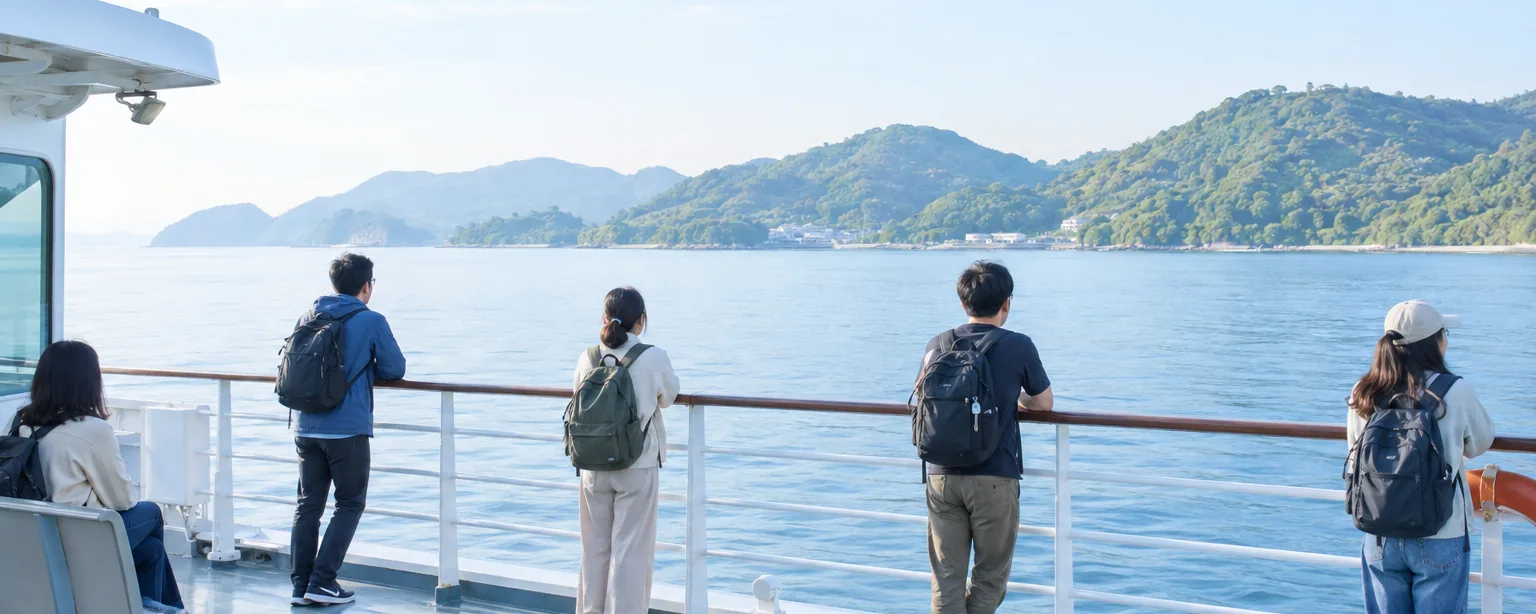
Multiple choice: a passage on slow travel
You can find the part of a passage a question is about, and choose the option the text supports after ruling out the other three.
Some people now spend two days on a trip they could make in three hours by plane. The passage here is about them.
The questions are multiple choice. Each has four options, A to D, and one answer. The wrong options are often built from words in the passage, so they look right to a quick reader.
Warm-up
Saying it another way
Read the sentence. Then choose the option that says the same thing in different words.
Read thisFew of the passengers on the night ferry were in any hurry to arrive.
Which sentence means the same?
How it works
Choose the correct letter, A, B, C or D.
- 1The writer uses Ines Varga as an example of someone who
- Acould not find a flight to her sister's home.
- Bchose a slow way to travel when a faster one was possible.
- Csaved money by not flying.
- Dwanted to meet new people on the way.
- 2According to the writer, the name slow travel
- Awas first used by travel agents.
- Bwas borrowed from a movement about food.
- Cfirst appeared in the 1980s.
- Ddescribes trips over short distances.
- 3What reason do most slow travellers give for continuing to travel this way?
- AThey want to reduce the carbon their trips produce.
- BThey enjoy the experience of the trip itself.
- CThey can work while they travel.
- DThey find flying too expensive.
- 4What does the writer say about the cost of slow travel?
- ATrain tickets are always more expensive than flights.
- BA train ticket can cost more than a flight on the same route.
- CMissing a connection usually means buying a new ticket.
- DSlow travellers spend less because they visit fewer places.
- 5Hugo Brandt advises his customers to
- Aavoid routes where they have to change trains.
- Bsee as many cities as they can.
- Cplan for the possibility that something will go wrong.
- Dstay near a station for the whole holiday.
- 6What is the writer's view of slow travel in the last paragraph?
- AIt only suits people with plenty of time and money.
- BIt will replace flying for most holidays.
- CEven a single slow trip can be worthwhile.
- DFamilies with young children should avoid it.
- 7What is the writer's main purpose in the passage?
- Ato persuade readers to stop flying
- Bto describe a way of travelling and weigh up its benefits and costs
- Cto compare the prices of train and air travel
- Dto give advice on planning a rail holiday
Questions 1 to 6 work through the passage from start to end. A question about the whole passage, like question 7, usually comes last.
The method
- 1Read the stem, then find the place
Read the question without the options and highlight its key words, such as names and numbers: select them, right-click and choose Highlight. Then find that part of the passage. The questions follow its order.
- 2Read that part closely
Read two or three sentences around the key words. The answer is often spread over more than one sentence.
- 3Answer in your own words first
Before you look at A to D, say what the passage tells you. Then look for the option that says the same thing.
- 4Rule out the other three
For each wrong option, find the reason it is wrong. If you cannot find one, read that part of the passage again.
- 5Use only the passage
Leave what you know about the world out of it. The answer is the option the passage supports, even when another one sounds true.
Four ways an option can be wrong
It uses words you can find in the passage, arranged into a claim the passage never makes.
The passage does say it, but it answers a different question from the one in the stem.
The passage says some, many or can. The option says all, always or will.
It may be true, or likely, but the passage does not say it anywhere.
The passage
Taking the long way
A When Ines Varga went to see her sister last spring, she could have flown there in under three hours. She chose to go by train and ferry, and the trip took two days. On the way she had a stopover in a port town she had never heard of, and talked for hours with a family she met on the ferry. By the time she arrived, she says, she felt as if her holiday had already begun. Travellers like Ines are sometimes called slow travellers. They are still a small minority, but travel agents say more people ask about trips like hers every year.
B The name comes from the slow food movement, which began in the 1980s as a protest against fast food. Its supporters believed that meals should be cooked with care and eaten without hurry. Slow travellers apply the same thinking to holidays. For them, the time between leaving home and arriving is part of the trip. They usually go by train, coach or boat, visit fewer places, and stay longer in each one.
C Many slow travellers first changed their habits for environmental reasons. Over the same distance, a train usually produces far less carbon per passenger than a plane, and for some people that difference is enough. Yet when they are asked why they continue, few put the environment first. They talk about watching the country change outside the window, about conversations with strangers, and about arriving without the queues and security checks of an airport. Some use the hours to work or read, and say the time does not feel lost.
D Slow travel has obvious costs. The first is time. A trip that takes two days in each direction uses four days of a holiday, which is a large share for someone with only two weeks off a year. The second is money: on many routes, a train ticket costs more than a cheap flight. The third is the risk of delay. When one train is late, a traveller can miss the next and lose a day, and the more changes a route has, the greater the risk.
E Hugo Brandt, who has planned rail holidays for twenty years, says most of these problems can be managed. He tells his customers to leave at least two hours between connections, and to book a hotel near the station for the first night in case something goes wrong. He also advises them to choose one or two places and stay a week in each. "People try to see six cities in ten days," he says, "and then they spend the whole holiday in stations."
F It is easy to dismiss slow travel as a hobby for people with plenty of time and money, and that criticism is partly fair. A family with young children and one week of holiday is unlikely to spend two days on trains. But slow travel does not have to mean a long trip. Taking one train journey where a flight was possible is enough for many people to notice what fast travel leaves out. For most travellers it will remain an occasional choice, but it may be the part of the holiday they remember best.
Watch me do one
I'll take question 3, because each of its wrong options borrows something from the passage.
The stem asks why most slow travellers continue. I highlight continue, because the passage may give a different reason for starting.
Paragraph C opens with why many first changed: the environment. Then it turns: when they are asked why they continue, few put the environment first. So A is about starting, and the stem asks about continuing.
Then they talk about the view from the window, conversations with strangers, and arriving without airport queues. In my own words: they like the travelling itself.
C is true of some travellers, and the stem asks about most. D, the price, is in paragraph D, where the train costs more. I choose B.
Practice with Elita6 questions
Six more questions, in the order of the passage. The last one is about the passage as a whole.
Question 1
Read paragraph A and answer question 1.
Read thisWhen Ines Varga went to see her sister last spring, she could have flown there in under three hours. She chose to go by train and ferry, and the trip took two days. On the way she had a stopover in a port town she had never heard of, and talked for hours with a family she met on the ferry. By the time she arrived, she says, she felt as if her holiday had already begun. Travellers like Ines are sometimes called slow travellers. They are still a small minority, but travel agents say more people ask about trips like hers every year.
The writer uses Ines Varga as an example of someone who
Question 2
Read paragraph B and answer question 2. Check what the date in it refers to.
Read thisThe name comes from the slow food movement, which began in the 1980s as a protest against fast food. Its supporters believed that meals should be cooked with care and eaten without hurry. Slow travellers apply the same thinking to holidays. For them, the time between leaving home and arriving is part of the trip. They usually go by train, coach or boat, visit fewer places, and stay longer in each one.
According to the writer, the name slow travel
Question 4
Read paragraph D and answer question 4. Watch the small words in the options.
Read thisSlow travel has obvious costs. The first is time. A trip that takes two days in each direction uses four days of a holiday, which is a large share for someone with only two weeks off a year. The second is money: on many routes, a train ticket costs more than a cheap flight. The third is the risk of delay. When one train is late, a traveller can miss the next and lose a day, and the more changes a route has, the greater the risk.
What does the writer say about the cost of slow travel?
Question 5
Read paragraph E and answer question 5. Each wrong option twists a detail from the paragraph.
Read thisHugo Brandt, who has planned rail holidays for twenty years, says most of these problems can be managed. He tells his customers to leave at least two hours between connections, and to book a hotel near the station for the first night in case something goes wrong. He also advises them to choose one or two places and stay a week in each. "People try to see six cities in ten days," he says, "and then they spend the whole holiday in stations."
Hugo Brandt advises his customers to
Question 6
Read paragraph F and answer question 6. The writer mentions a criticism before giving a view.
Read thisIt is easy to dismiss slow travel as a hobby for people with plenty of time and money, and that criticism is partly fair. A family with young children and one week of holiday is unlikely to spend two days on trains. But slow travel does not have to mean a long trip. Taking one train journey where a flight was possible is enough for many people to notice what fast travel leaves out. For most travellers it will remain an occasional choice, but it may be the part of the holiday they remember best.
What is the writer's view of slow travel in the last paragraph?
Question 7
This one is about the whole passage. Look back at the first sentence of each paragraph before you choose.
What is the writer's main purpose in the passage?
Words to keep
A smaller part of a group, less than half. Slow travellers are still a small minority.
Something people do to show they object to something. Slow food began as a protest against fast food.
For each person travelling. A train usually produces less carbon per passenger than a plane.
A train, bus or flight you change to during a trip. Leave at least two hours between connections.
Decide it is not worth serious thought. Some people dismiss slow travel as a hobby for the rich.
Happening now and then. For most people, slow travel will be an occasional choice.
Before you go
Read the stem first, highlight its key words and find the place in the passage. The questions follow its order.
Say the answer in your own words before you read A to D.
Find a reason to rule out each wrong option: a word match, a true detail that answers something else, a claim that is too strong, or something never said.
Watch the small words in a stem, such as continue and most. They often decide between two options.
Next: Next, a guide briefs a group before a coastal walk, and you answer Part 2 multiple choice questions on what she says.